Metal Wallet vs Leather Wallet: Which Is Better for You?
We make aluminum wallets, so we have a side in this. We've tried to be honest about where leather is the better choice.
Most people grow up with a leather bifold. Slim metal wallets have become a popular alternative over the last decade, especially for people who carry fewer cards and less cash. Neither is better for everyone. Here's how they compare and how to decide.
The quick comparison
| Metal wallet | Leather wallet | |
|---|---|---|
| Thickness | Slim, and grows only as much as the cards inside | Starts thicker and spreads with use |
| Cards | Usually 1–12 or 1–20 in one stack | Separate slots, often 6–12 |
| Cash | Folded, under a clip or strap | Flat, in a bill compartment |
| Coins and receipts | Not really | Often has room |
| Finding a card | Fan the stack | Each card in its own slot |
| Durability | Metal plates rarely fail; check the elastic, hinges or clip | Good leather lasts years; stitching and edges wear |
| How it ages | Finish can scuff at the edges | Develops a patina; cheap leather cracks and peels |
| RFID blocking | Built in, from the metal | Only if a lining is added |
| Feel | Rigid, cool to the touch | Soft, warm, flexible |
| Personalization | Laser engraving, sharp and permanent | Embossing or debossing, usually initials |
Where metal wallets win
- They stay slim. A leather wallet stretches to fit what's in it and stays stretched. A metal wallet is only as thick as your cards, which makes it comfortable in a front pocket.
- They hold their shape. No sagging, curling or a permanent wallet outline in your back pocket.
- They protect cards. Rigid plates stop cards bending or cracking.
- RFID blocking comes free. The metal itself blocks RFID readers. The real risk to payment cards is low, but it's useful for work badges and some ID cards. See our RFID explainer.
- Engraving lasts. A photo, name or date laser-engraved into aluminum won't rub off the way embossing on leather can fade.
Where leather wins
- Cash and receipts. If you carry lots of bills flat, coins or receipts, a leather bifold is simply more practical.
- Seeing every card at a glance. Individual slots beat fanning a stack if you swap between many cards.
- Feel and tradition. Good leather is soft, ages well and suits a suit jacket pocket or a formal setting.
- Quiet. Metal can click against keys or a phone; leather doesn't.
Which should you choose?
Choose metal if you carry fewer than 20 cards, a modest amount of cash, want a front-pocket wallet, and like something that doesn't change shape.
Choose leather if you carry lots of cash or receipts, want every card in its own slot, or prefer the feel and look of leather.
Plenty of people use both: a leather wallet at home for receipts and backups, and a slim metal wallet for everyday carry.
Switching from leather to metal
- Empty your current wallet and sort out what you actually use. Most people find they carry cards they haven't touched in months.
- Keep the essentials: ID, one or two payment cards, insurance card, transit or work badge.
- Fold a few bills for the money clip.
- Give it a week. Fanning cards instead of pulling them from slots takes a few days to become second nature.
Our take
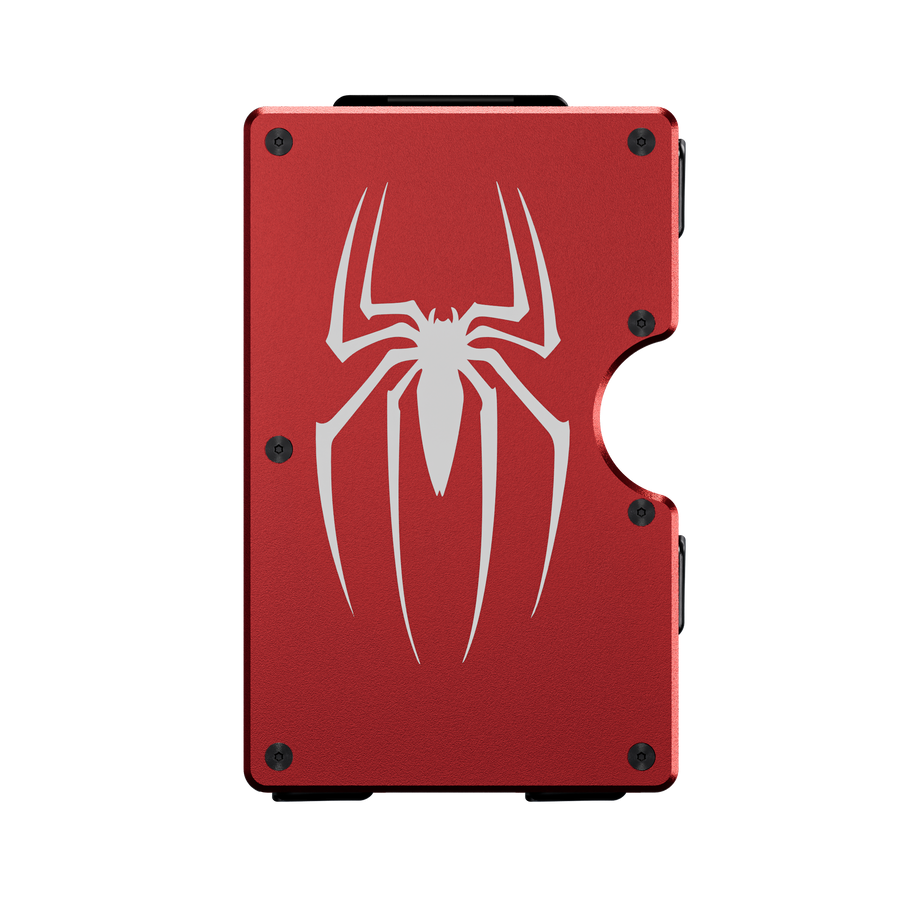
Our wallets are 6061 aluminum plates joined by 316L stainless steel hinges, with no elastic to stretch out. They hold 1 to 20 cards, block RFID and come with a stainless steel money clip. The Stealth is $34, Loadout engraved designs are $44, and Project 1-of-1 with your own engraving is $79. All are covered by a lifetime structural warranty, and Stealth and Loadout wallets can be returned within 30 days in like-new condition (sale and personalized items excepted) if metal isn't for you.
Questions
Are metal wallets uncomfortable?
In a back pocket, a rigid wallet can feel harder to sit on than leather. In a front pocket, a slim metal wallet is usually more comfortable than a thick bifold.
Do metal wallets damage cards?
A well-made one shouldn't. Look for smooth inner surfaces. Rigid plates usually protect cards better than leather, which lets them bend.
Do metal wallets set off metal detectors?
Like keys or a belt buckle, they can. Put it in the tray at airport security.
How long does a metal wallet last?
The plates can last for many years. The parts that wear are whatever holds them together: elastic bands, rivets or clips. That's why we use steel hinges and back them with a lifetime structural warranty.